How Much Does It Cost to Rent Goats to Clear Land on Long Island?
What Planting Zone Is Long Island? Zones 7a and 7b, Town by Town
By Eat Your Yard Life · Manorville, NY · Updated October 2026 · 8 min read
By Eat Your Yard Life · Manorville, NY · Updated October 2026 · 8 min read
If you’re trying to work out what planting zone Long Island is in, the short answer is zone 7. Most of the island is zone 7b, and a colder inland belt through the Pine Barrens, from Patchogue and Manorville out to Riverhead and parts of the Hamptons, is zone 7a. That half-zone difference decides which fruit trees, shrubs and perennials make it through a hard winter in your yard.
This guide lists the planting zone for more than 50 Long Island towns, explains why part of Suffolk runs colder, and gives you the frost dates and month-by-month planting calendar that matter most for vegetables. It’s written for homeowners in Nassau and Suffolk who want to plant the right things at the right time.
Quick answer
Long Island is in USDA hardiness zones 7a and 7b. All of Nassau County, western Suffolk, the North Shore and the far ends of both forks are zone 7b, where the coldest winter night averages 5 to 10°F. A cooler inland strip from Patchogue and Manorville to Riverhead, the Moriches and Southampton is zone 7a, averaging 0 to 5°F.
In this guide
The USDA Plant Hardiness Zone Map splits the country into zones based on the average coldest night of the year. The current map came out in November 2023. The USDA’s Agricultural Research Service built it with Oregon State University’s PRISM Climate Group from weather data covering 1991 to 2020, and it moved a lot of Long Island from 7a into the slightly warmer 7b.
| Zone | Coldest winter night and where you’ll find it |
|---|---|
| 7b | 5°F to 10°F. All of Nassau County, western Suffolk, the North Shore, and the far ends of the North and South Forks. |
| 7a | 0°F to 5°F. The Pine Barrens and inland central and eastern Suffolk, plus the South Shore from about Patchogue to Southampton. |
Each zone is a 10-degree band, and the a and b halves split it into 5-degree steps. Zone 7a is the colder half. A plant rated for zone 7 should handle either one, while a plant that only just survives in 7b is a gamble in 7a.
We looked up the 2023 USDA zone for each ZIP code below. The lookup uses the center of each ZIP code, so if you live near the line between two zones, check your exact address on the USDA Plant Hardiness Zone Map.
| Area and towns (ZIP code) | Zone |
|---|---|
| Nassau, North Shore: Glen Cove (11542), Great Neck (11021), Port Washington (11050), Roslyn (11576), Oyster Bay (11771) | 7b |
| Nassau, central and South Shore: Hicksville (11801), Garden City (11530), Hempstead (11550), Levittown (11756), East Meadow (11554), Rockville Centre (11570), Baldwin (11510), Massapequa (11758), Long Beach (11561) | 7b |
| Western Suffolk: Huntington (11743), Northport (11768), Commack (11725), Smithtown (11787), Brentwood (11717), Bay Shore (11706), Islip (11751), East Islip (11730), Babylon (11702) | 7b |
| Suffolk, North Shore and center: Stony Brook (11790), Port Jefferson (11777), Miller Place (11764), Rocky Point (11778), Wading River (11792), Centereach (11720), Coram (11727), Holbrook (11741) | 7b |
| Brookhaven, Pine Barrens and South Shore: Patchogue (11772), Medford (11763), Bellport (11713), Yaphank (11980), Middle Island (11953), Ridge (11961), Shirley (11967), Mastic (11950) | 7a |
| Moriches to Southampton: Center Moriches (11934), East Moriches (11940), Eastport (11941), Manorville (11949), Westhampton (11977), Quogue (11959), Hampton Bays (11946), Southampton (11968), Sag Harbor (11963) | 7a |
| Riverhead and the North Fork: Riverhead (11901), Calverton (11933), Cutchogue (11935) | 7a |
| North Fork tip: Southold (11971), Greenport (11944) | 7b |
| South Fork, east: Bridgehampton (11932), East Hampton (11937), Montauk (11954) | 7b |
The pattern is easy to see. Nassau, western Suffolk and the North Shore are all 7b. From Patchogue east, most of the South Shore and the Pine Barrens drop to 7a, until you reach Bridgehampton, East Hampton and Montauk, which are back in 7b. The North Fork is split: Riverhead and Cutchogue are 7a, Southold and Greenport are 7b. Manorville, where we’re based, is 7a.
Water holds heat. Long Island Sound, the Atlantic and the Great South and Peconic bays keep nearby land a few degrees warmer on winter nights, which is why the North Shore, the western South Shore and the far ends of both forks stay in 7b.
The Pine Barrens work the other way. The ground there is deep, dry glacial sand that gives up its heat quickly on clear, still nights, and cold air settles into the low spots. That’s why central Suffolk often sees frost earlier in fall and later in spring than the coast, even though it’s only a few miles inland.
Your own yard has microclimates too. A bed against a south-facing wall can act half a zone warmer, while the bottom of a slope or a hollow can run colder than the map says.
Hardiness zones only tell you about winter cold. They matter most for plants that stay in the ground year after year: fruit trees, berry bushes, shrubs, perennials and bulbs. Check the tag or catalog listing for the coldest zone a plant can handle.
The map also leaves out things that matter just as much here: summer heat, wind, salt spray near the water, and Long Island’s sandy, acidic soil.
For a vegetable garden, frost dates matter more than the zone. They change from year to year and town to town, but these are good planning numbers for Long Island:
| Milestone | Typical timing on Long Island |
|---|---|
| Average last spring frost | Mid-April near the coast; around April 20 on the East End, and later in the Pine Barrens |
| Safe to plant tomatoes, peppers and basil | Early to mid May, once nights stay above 50°F |
| Average first fall freeze | Around the start of November, a little later right on the water |
| Frost-free growing season | Roughly six to seven months near the coast, a few weeks less inland |
Cornell Cooperative Extension of Suffolk County has put the average last freeze for eastern Long Island around April 20, later in the Pine Barrens, and the National Weather Service office in Upton has put the typical first freeze around November 1. Treat these as averages, not promises. A cold snap can still hit in early May, so keep an eye on the forecast and have a sheet ready to cover young plants.
Here’s a simple month-by-month plan for a home garden in zone 7a or 7b. If you’re in a 7a town, lean toward the later end of each window.
| Month | What to plant or do |
|---|---|
| March | Start tomatoes, peppers and eggplant indoors. Sow peas and spinach outside once the soil can be worked. Prune fruit trees while they’re dormant. |
| April | Sow lettuce, radishes, carrots, beets and chard. Plant onion sets, seed potatoes, asparagus crowns, bare-root fruit trees and berry bushes. |
| May | After mid-May, set out tomatoes, peppers, eggplant and basil. Sow beans, squash, cucumbers and sweet corn in warm soil. |
| June | Mulch the beds, set up drip irrigation and sow a second round of beans. Keep lettuce going in partial shade. |
| July | Harvest. Late in the month, plant fall broccoli and kale transplants and sow carrots. |
| August | Sow lettuce, spinach, radishes and turnips for fall. Late August opens the best window for seeding lawns. |
| September | Plant trees, shrubs and perennials. Seed or overseed the lawn. Divide crowded perennials. |
| October | Plant garlic and spring bulbs like tulips and daffodils. Sow a cover crop on empty beds. |
| November to February | Test your soil, order seeds and plan next year’s beds. Protect figs and other tender plants. |
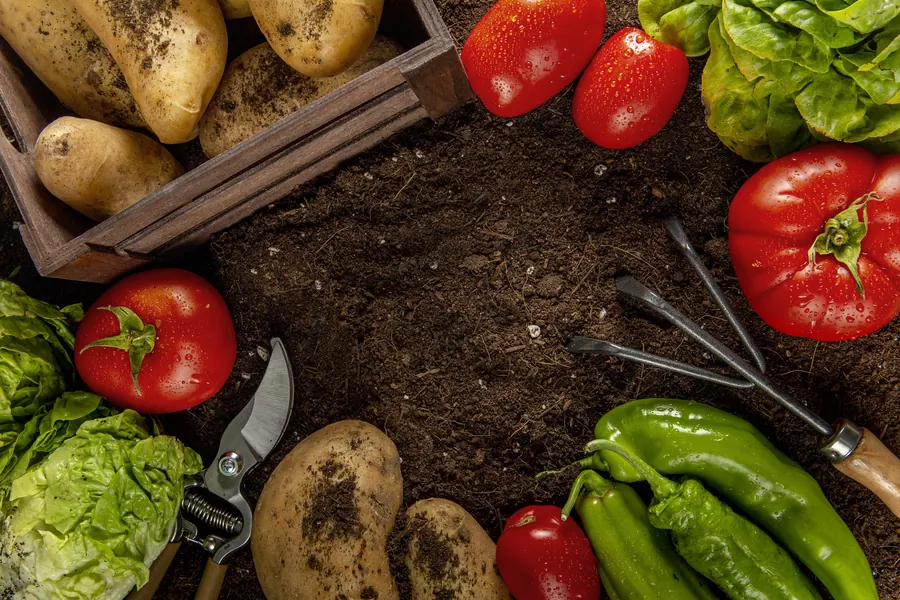
Long Island’s long, warm summers suit tomatoes, peppers, eggplant, beans, squash, cucumbers and sweet corn. Spring and fall are made for lettuce, spinach, kale, peas, carrots, beets and garlic. Two old varieties even carry the island’s name: the Long Island Cheese pumpkin and Long Island Improved Brussels sprouts.
Blueberries are a natural fit, since they like the acidic, sandy soil much of the island already has. Apples, pears and peaches grow well as fruit trees, and raspberries, strawberries and grapes fit into borders and along fences. Figs are popular too, as long as they get a warm, sheltered spot and some winter protection. On the coast, the native beach plum shrugs off wind and salt spray.
For ways to fit these into a yard that still looks good from the street, see our front yard and backyard ideas for growing food on Long Island.
Most of Long Island sits on sand and gravel left behind by glaciers. It drains fast, which roots like, but it also dries out quickly, holds few nutrients and tends to be acidic. A few habits make a big difference:
That’s the regenerative way we like to build: feed the soil, keep rainwater on the property and plant things that give something back. If you’d rather have help, our edible garden installs and drip irrigation are built around exactly these conditions.
Zone 7. Under the 2023 USDA map, Long Island is split between zones 7a and 7b. A few waterfront spots run a little milder in winter, but the island as a whole is not zone 8.
All of Nassau County is zone 7b, with an average coldest winter night of 5 to 10°F.
Suffolk is mixed. Western Suffolk, the North Shore and the far ends of both forks are 7b. The Pine Barrens and the South Shore from about Patchogue to Southampton are 7a.
Wait until early to mid May, after the last frost, when nights stay above 50°F. Tomatoes set out in cold April soil usually just sit there and don’t catch up.
Late August through September is the best window. Warm soil and cooler nights help new grass root in before winter, with less weed competition than in spring.
October is the usual month, and early November works in a mild fall. Plant the cloves a few weeks before the ground freezes so they can root in, then mulch the bed.
Manorville (11949) is zone 7a, with an average coldest winter night of 0 to 5°F. It sits in the colder Pine Barrens belt of central Suffolk.
About the author
Eat Your Yard Life is a Long Island landscape company based in Manorville, NY, run by Matthew Kopp. Matthew has 35 years in the green industry, ran two landscape companies before this one and is horticulture trained. We plan and build edible gardens, look after lawns, trees and shrubs, handle drainage and irrigation, and bring in goats for overgrown lots across Long Island.
Want a garden planned around your zone?
We design edible gardens for Long Island yards: the right plants for your zone, sun and soil, built by hand. Tell us about your yard and we’ll put together a free quote. No pressure, no obligation.